What Happens When AI Traders Lose? A Real Week Inside ARCIS
Real AI trading bot results from a losing week inside ARCIS, and what drawdown, diversification and portfolio performance actually tell you.

Automated trading is easy to talk about when everything is green.
The more useful lessons usually come when it isn’t.
This week the ARCIS portfolio finished slightly negative after a volatile period across Gold, FX and indices.
Rather than hide the losing week, I recorded a walkthrough showing exactly what happened above.
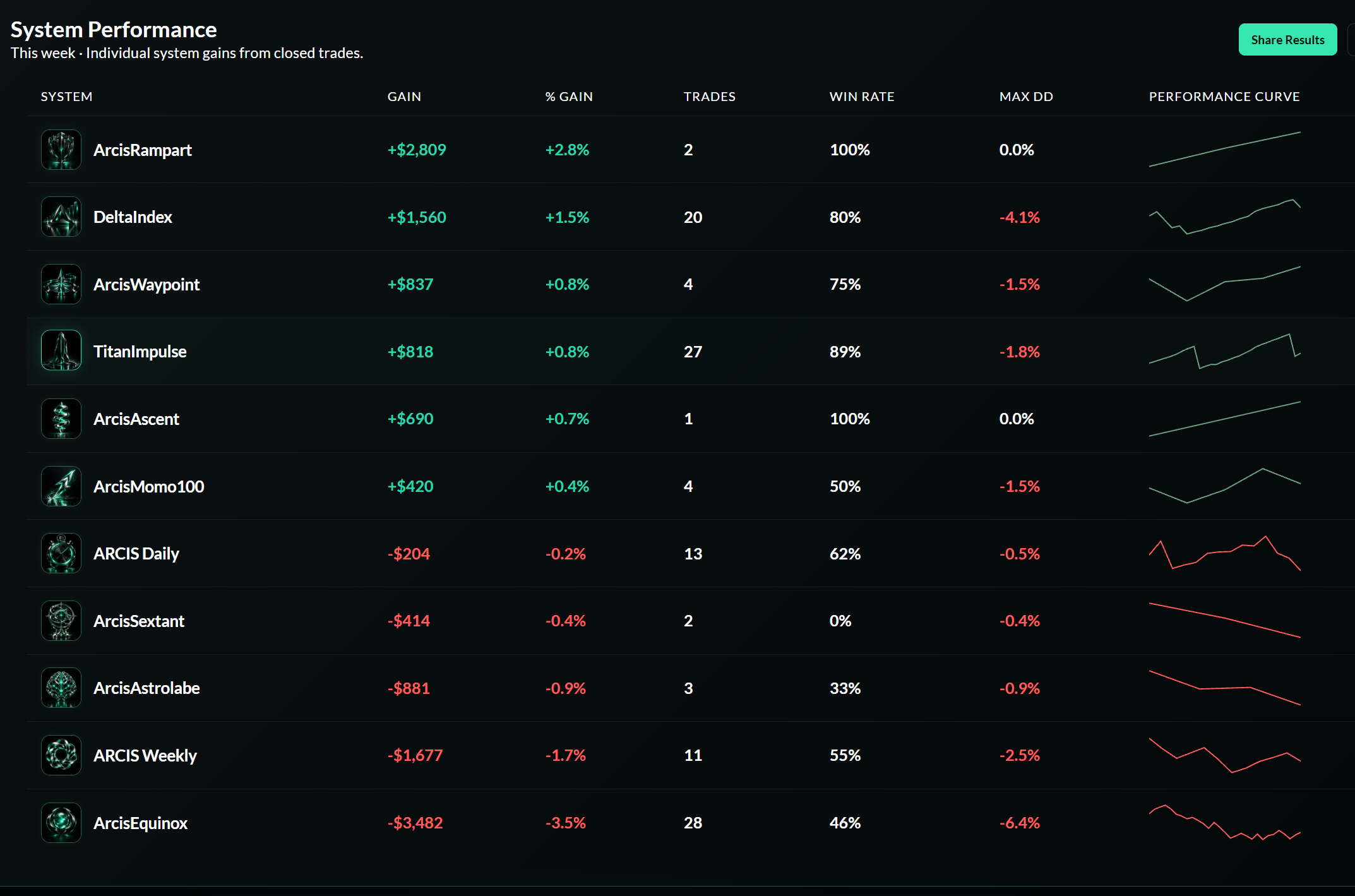
These are real AI trading bot results.
Not a backtest.
Not three selected winning trades.
A real portfolio having a difficult week in the market.
And that makes it far more useful to study.
What AI Trading Bot Results Actually Tell You
One of the biggest mistakes traders make is judging an automated system from a tiny sample.
Three losing trades.
A red day.
A bad week.
Then the conclusion arrives:
“The system stopped working.”
That sounds logical when you are looking at money disappearing from an account.
Statistically, it usually tells you very little.
A trading strategy has an expected distribution of wins, losses, drawdowns and losing streaks.
Those outcomes do not arrive neatly.
You do not get one winner, one loser, one winner and one loser forever.
They cluster.
Wins can arrive together.
Losses can arrive together.
A perfectly valid strategy can therefore look terrible over a short period.
The question is not whether the system lost this week.
The better question is whether the behaviour remains within the range you would reasonably expect from that system.
A Losing Week Is Not Automatically A Broken System
When I review an automated trading strategy, I care far more about the larger sample.
How many trades has it placed?
What is its expectancy?
What is the average winner?
What is the average loss?
What does a normal drawdown look like?
How long have previous losing streaks lasted?
How does the strategy behave in different market environments?
That is why ARCIS monitors systems over rolling periods rather than switching them on and off because of one ugly Tuesday.
A system can lose this week and still have a valid long-term edge.
Equally, a system can have an incredible week and still be terrible.
One good result proves very little.
The same applies to one bad result.
Why Portfolio Trading Changes The Picture
This becomes more important when you stop looking at trading systems individually and start looking at them as a portfolio.
Different strategies respond to different environments.
A Gold breakout system may perform well when volatility expands.
A mean-reversion strategy may struggle during the same move.
An index system that was weak last month may suddenly wake up when equity-market volatility returns.
An FX system can sit quietly while Gold does all the heavy lifting.
Then the roles reverse.
That is the reason I prefer combining different trading systems instead of relying on one supposed perfect robot.
You do not need every system winning at the same time.
You need different edges that can contribute under different conditions.
That is a very different way of thinking about automated trading.
Why Drawdown Matters More Than A Red Week
Traders often focus on profit because profit is exciting.
Drawdown is where you learn whether the strategy is actually usable.
Suppose two systems both make 20%.
One experiences a 5% drawdown.
The other experiences a 35% drawdown.
Those are not remotely the same trading experience.
The return number alone hides that difference.
That is why I look at returns alongside drawdown, profit factor, trade count, expectancy and losing streaks.
When an automated strategy has a bad week, those metrics provide context.
Without them, you are simply staring at red numbers and guessing.
## Why We Keep Losing Trades Visible
This is also why ARCIS keeps every trade visible from open to close.
Winning trades stay.
Losing trades stay.
Drawdowns stay.
A bad week does not disappear because it makes the performance page look less impressive.
That matters in automated trading because screenshots are incredibly easy to manipulate.
A single profitable day tells you almost nothing.
A complete trading history is much harder to argue with.
You can view the ARCIS live performance here:
https://arcistrade.tech/autotrade/performance
The goal is not to create a track record that looks perfect.
Perfect trading records do not exist in real markets.
The goal is to provide enough information to judge what the systems are actually doing.
Automation Removes A Different Problem
Automation does not eliminate losses.
It eliminates a different problem.
Human interference.
A system does not panic because it lost three trades.
It does not revenge trade.
It does not suddenly double risk because it wants the money back.
It does not get bored and take a trade that was never part of the strategy.
The rules keep running.
That becomes particularly valuable during volatile periods.
When markets move quickly, discretionary traders can become caught in the emotional swings of every price move.
An automated portfolio simply continues executing its rules.
That does not guarantee profit.
It does provide consistency of execution.
When Should An Automated System Be Removed?
That does not mean you should blindly run a failing system forever.
There is a difference between normal drawdown and genuine deterioration.
The challenge is having enough data to tell them apart.
Inside ARCIS, system performance is monitored over longer rolling windows.
If performance deteriorates sufficiently, a system can move back into forward testing rather than remaining active indefinitely.
That process is deliberately slower than reacting to one bad day.
You want evidence before making a decision.
Otherwise you risk doing something traders do constantly:
Switching a system off during the drawdown...
Just before the recovery begins.
What This Week Actually Teaches
The useful lesson from this week is not that ARCIS lost money.
Trading systems lose money regularly.
The useful lesson is how you evaluate what happens next.
Look at the sample.
Look at the expected drawdown.
Look at the system’s historical behaviour.
Look at the portfolio.
Then make decisions from evidence rather than emotion.
That is what systematic trading is supposed to achieve.
Not a world where every trade wins.
A process where risk, probability and execution are controlled well enough for an edge to play out over time.
A First Look At ArcisCharts
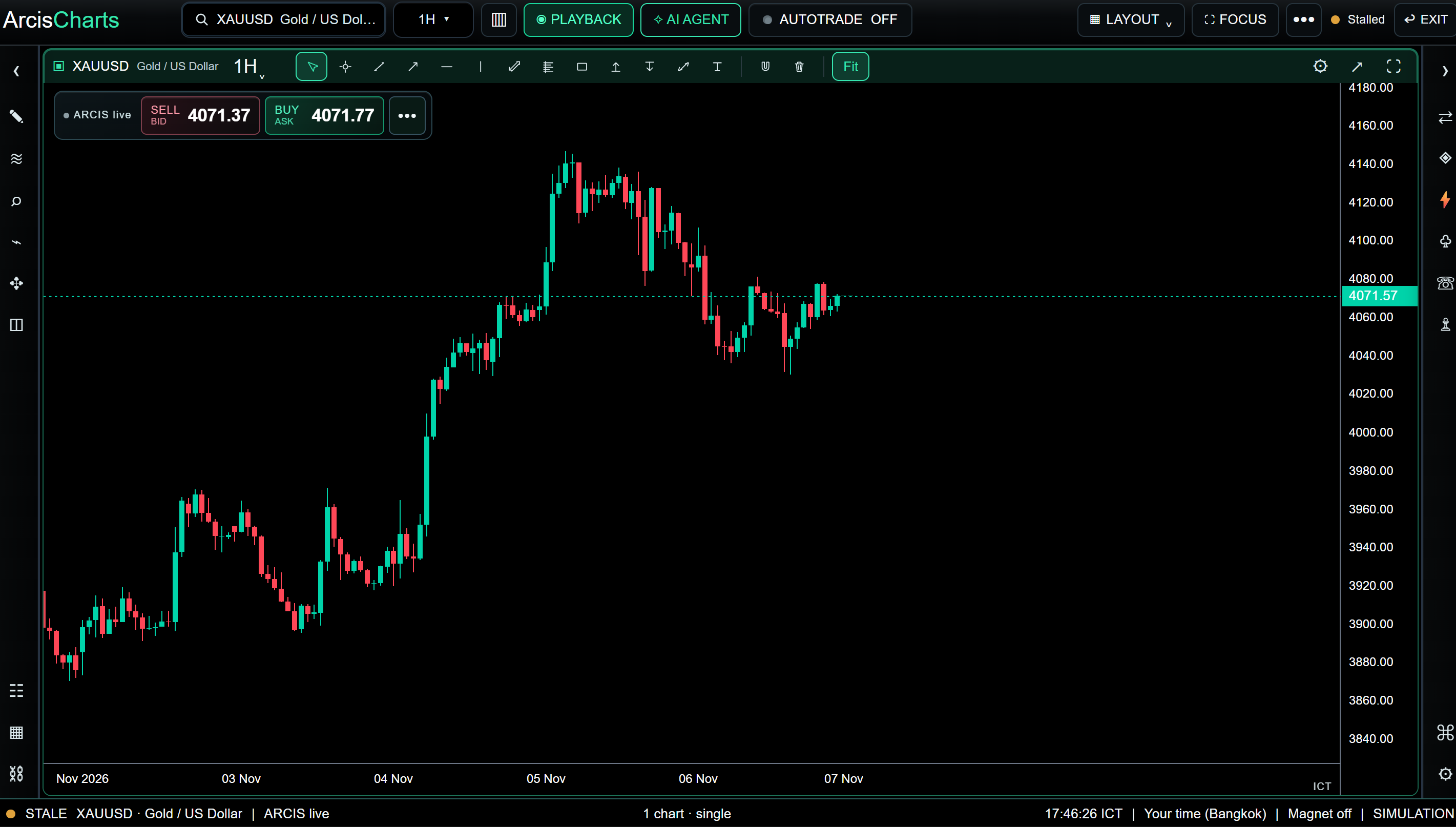
In the video above I also give a first look at ArcisCharts, our upcoming AI-powered charting environment.
The goal is to bring market analysis, system information and automation closer together rather than forcing traders to jump between multiple platforms.
It is still being developed, but the video shows how it fits into the wider ARCIS ecosystem and how we are thinking about the next generation of trading tools.
The Bigger Picture
Five profitable months do not mean the sixth month must be profitable.
A losing week does not mean the systems have stopped working.
Both statements come from the same principle.
Trading happens in probabilities.
The job is to understand those probabilities, control the risk and give a valid edge enough time to operate.
That is far less exciting than promising that an AI trading bot wins every day.
It is also much closer to how real systematic trading actually works.
You can explore the ARCIS automated trading platform here:
>>Click here to explore ARCIS free for 14 days<<
Trading involves risk. Past performance does not guarantee future results.
Common questions
Can AI trading bots lose money?
Yes. Every trading system can experience losing trades, losing days and drawdowns. Automation removes emotional execution but does not remove market risk.
Does one losing week mean a trading system has stopped working?
No. A single week is usually too small a sample. Performance should be judged against historical expectancy, drawdown, trade count and longer rolling periods.
What should I look at besides win rate?
Expectancy, average win versus average loss, drawdown, profit factor, trade count, losing streaks and performance across different market conditions all matter.
Why run multiple automated trading systems?
Different systems can perform well under different market conditions. Combining uncorrelated approaches can reduce dependence on one strategy or market environment.
What is a normal drawdown in automated trading?
There is no universal number. Drawdown should be compared with the system’s historical behaviour, risk settings and expected return.
Are ARCIS trades tracked when they lose?
Yes. ARCIS tracks trades from open to close, including winners, losers and drawdowns, so negative periods remain visible alongside profitable ones.