How I Built a Fully Automated AI Trading Platform | ARCIS 2.0
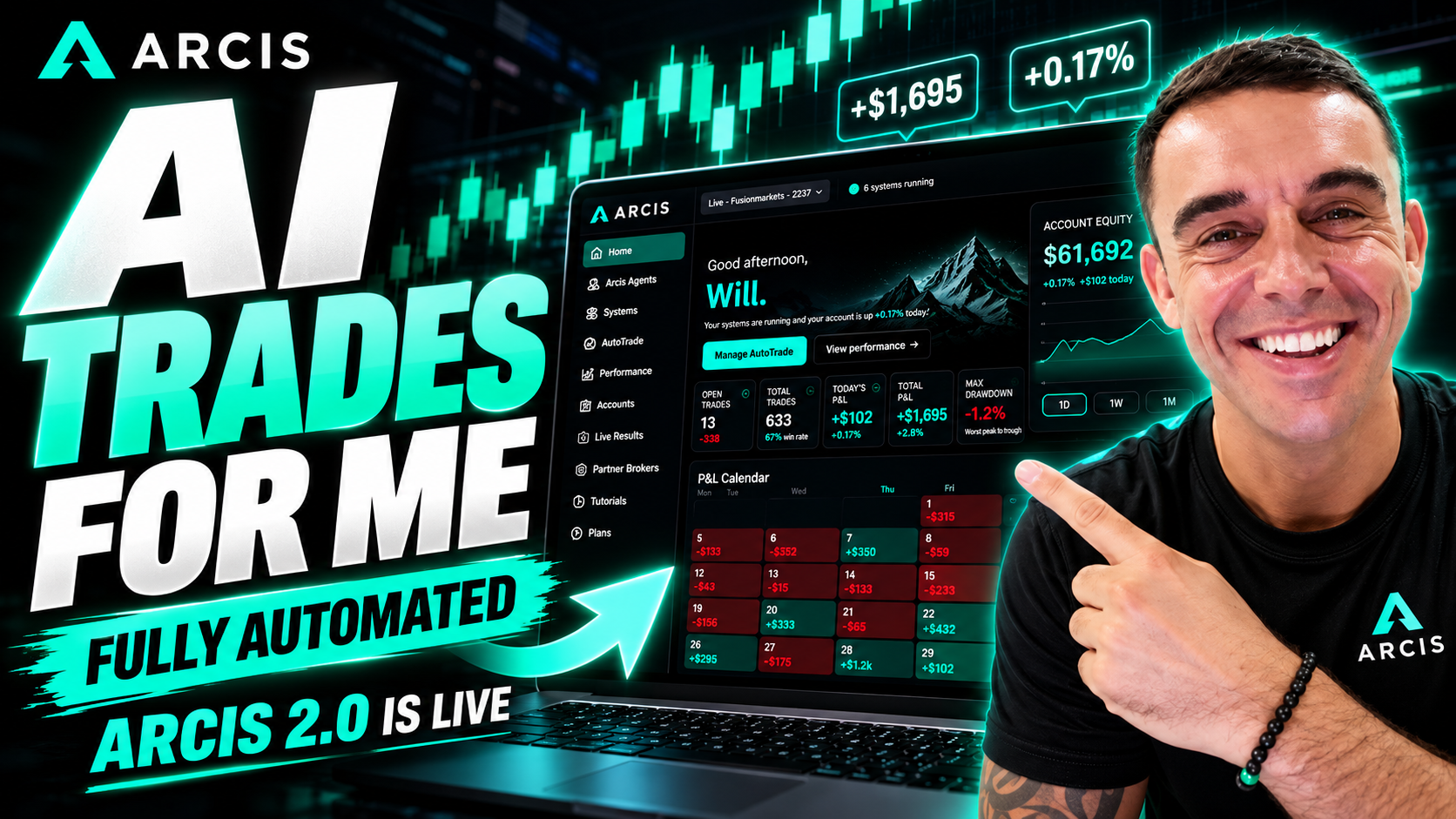
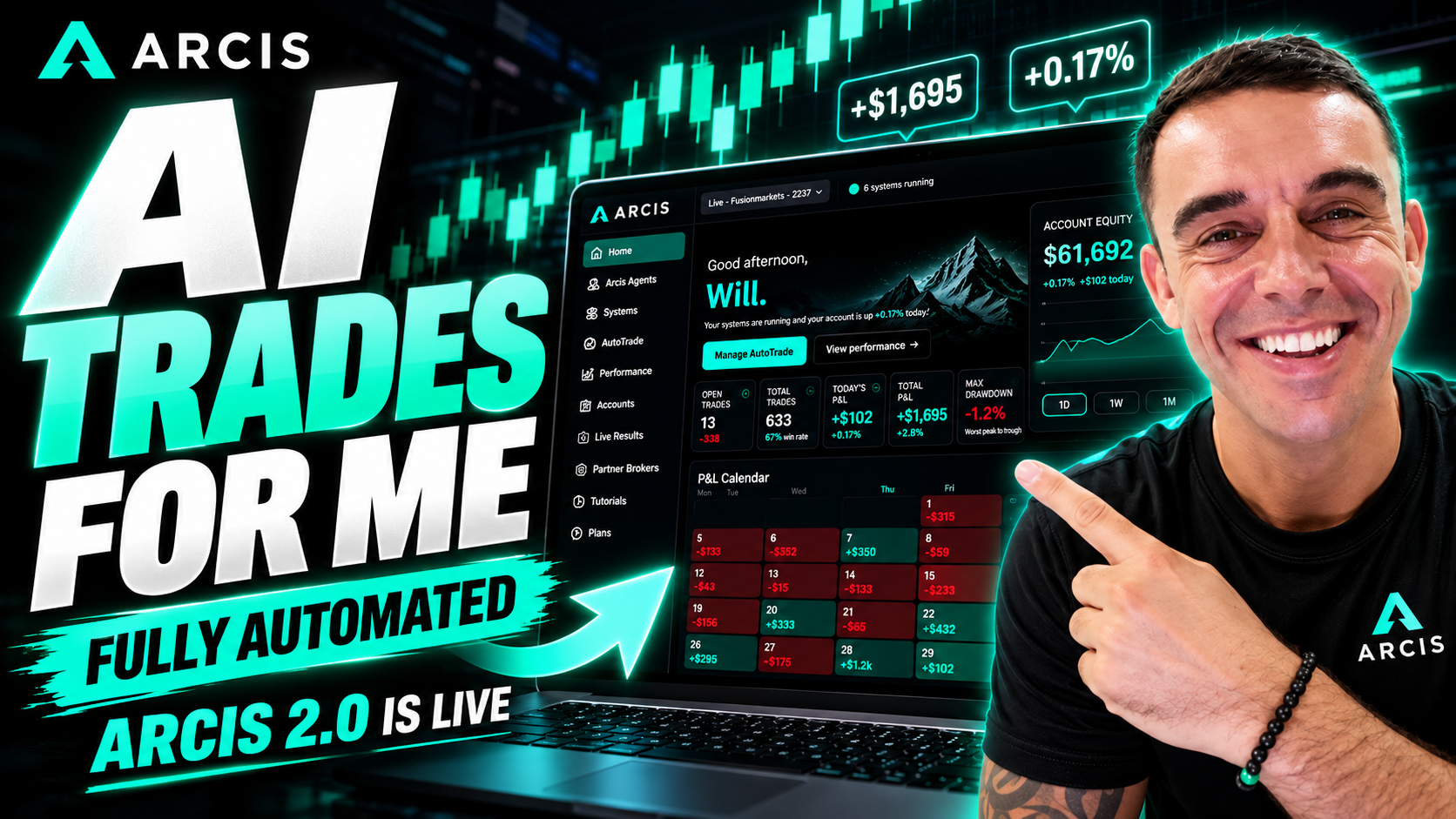
I built ARCIS 2.0 as a fully automated AI trading platform. Here’s how it works and why AI trading agents are the next step in automation.
>>CLICK HERE TO WATCH THE FULL VIDEO<<
The redesign is obviously a big part of ARCIS 2.0.
The platform is cleaner, easier to navigate and makes it much simpler to understand what your automated systems are doing.
But the redesign is not really the interesting part.
The interesting part is what comes next.
AI trading agents.
From Trading Algorithms to Trading Agents
Traditional automated trading has existed for decades.
Most algorithms operate from fixed instructions.
If X happens, perform Y.
That approach can be extremely effective when the underlying trading logic is robust.
But it also means that changing or improving a system normally requires additional research, backtesting, coding and validation.
AI trading agents introduce a different model.
Instead of thinking only in terms of code, we can start thinking in terms of trading playbooks.
And that distinction matters.
The value of an AI trading agent is not simply that it has access to artificial intelligence.
AI itself is not a trading edge.
The important question is:
What knowledge are you giving it?
Experience Is Still the Edge
I’ve spent nearly 20 years trading and developing systematic strategies.
Over that time I’ve built well over 100 systems across FX, commodities, futures, indices and stocks.
Some worked.
Some failed.
Some worked brilliantly in one market environment and struggled in another.
That experience matters because successful system development is not simply about finding an entry signal.
You have to understand risk.
Expectancy.
Drawdowns.
Position sizing.
Market regimes.
Correlation.
Execution.
And, perhaps most importantly, when the evidence tells you that an idea simply does not work.
That is the kind of knowledge I want ARCIS Agents built around.
Rather than asking AI to invent trading from scratch, the idea is to give it years of accumulated trading knowledge and structured playbooks to work from.
That is where I think things become much more interesting.
AI Will Not Fix Bad Trading Logic
There is going to be a predictable problem as AI trading becomes easier to access.
People will give increasingly powerful agents increasingly bad instructions.
If the underlying idea has no edge, adding AI does not magically create one.
You can take a poor retail trading strategy, automate it perfectly and still lose money.
You have simply become more efficient at executing a bad idea.
The technology is not the edge.
The thinking behind it remains the edge.
That is why I believe the combination of AI with genuine trading experience, quantitative testing and disciplined risk management is far more important than simply attaching the words “AI trading” to another bot.
What ARCIS 2.0 Does Today
ARCIS 2.0 brings the current generation of automated trading into one platform.
Users can manage multiple trading systems, monitor performance, control risk and see what is happening across the portfolio without manually executing every trade.
Every ARCIS trade is tracked from open to close.
That includes winning trades.
Drawdowns.
System-level performance.
And the overall portfolio.
You can also see verified live-user performance rather than relying solely on isolated screenshots or selected trades.
That transparency is important because real systematic trading is never a perfectly smooth equity curve.
Systems go through strong periods.
They also go through weak periods.
Different systems often perform well under different market conditions.
That is one of the reasons ARCIS is structured as a portfolio of trading systems rather than one supposed “holy grail” robot.
You can see the live performance section here:
https://arcistrade.tech/autotrade/performance
Why Automation Matters
For years, trading has been presented to retail traders as something that requires sitting in front of charts for hours every day.
There are traders who are extremely good at discretionary trading.
But it is still a demanding job.
The more of the repetitive process that can be systemised and automated correctly, the less reason there is for a human to manually repeat the same decisions every day.
The wider financial world already operates this way.
Execution is automated.
Risk systems are automated.
Payments are automated.
Portfolio processes are increasingly automated.
Trading is moving in the same direction.
AI agents potentially accelerate that shift considerably.
There is a line often attributed to Eric Hoffer that captures the idea well:
“In times of change learners inherit the earth; while the learned find themselves beautifully equipped to deal with a world that no longer exists.”
Trading technology is changing quickly.
The important thing is not blindly following every new AI trend.
It is understanding what the technology can improve, what still requires genuine expertise, and where humans remain responsible for the quality of the underlying trading logic.
What Comes Next
I have already built 15 ARCIS trading agents that are currently going through testing.
The first live agent has started trading privately within the ARCIS Stocks environment.
Over time, ARCIS Agents will begin appearing inside the main platform across different systems and markets.
The goal is not to replace systematic trading principles.
It is the opposite.
The goal is to take the principles developed through years of trading, research and system development and give the next generation of automation access to them.
That is what I find exciting about AI trading agents.
Not AI replacing experience.
AI being trained by experience.
ARCIS 2.0 is the platform being built around that next step.